
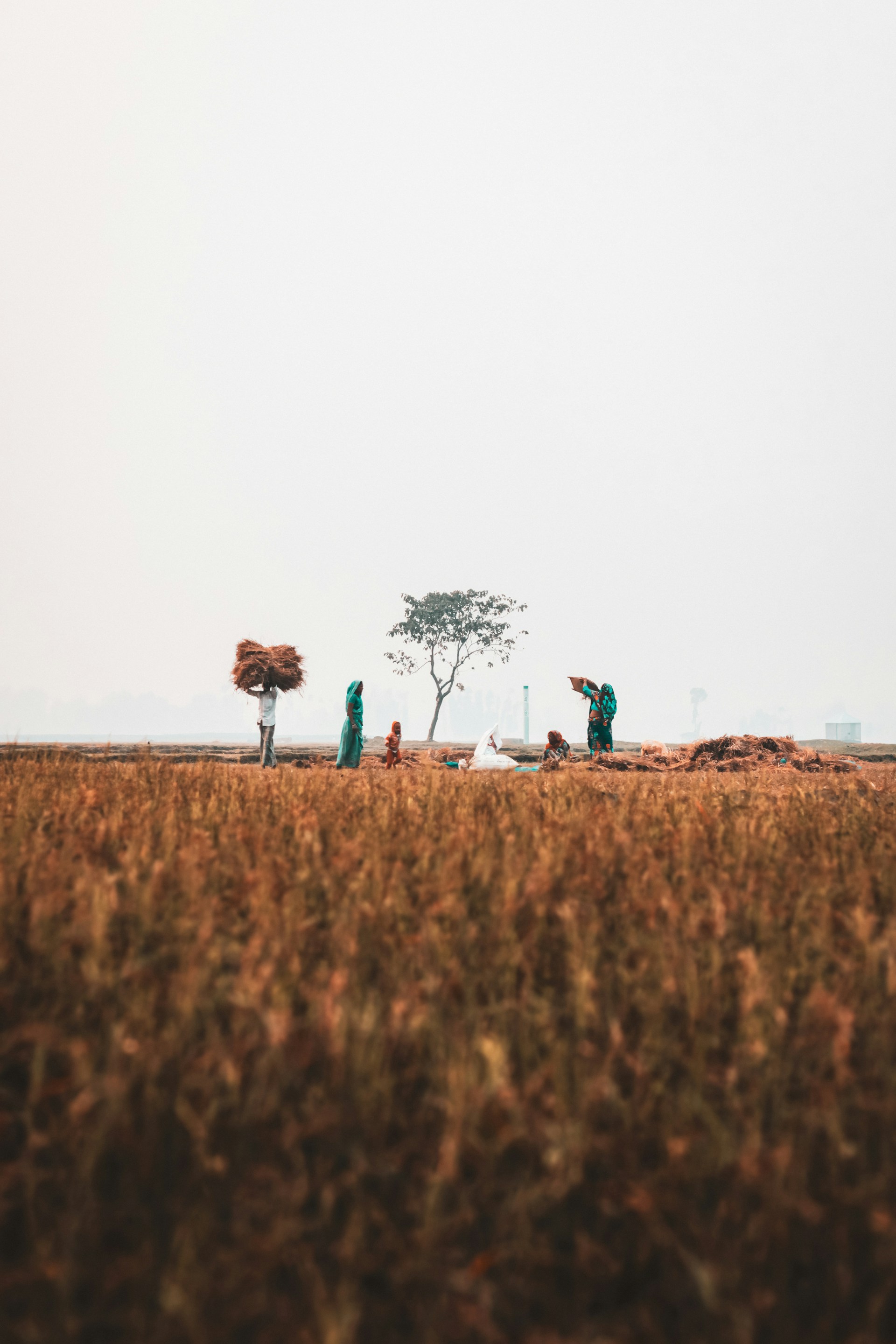
Agri and Food Business Bangladesh: The Quiet Giant of the Next Investment Cycle
Few sectors capture the country’s economic fundamentals as clearly as agri and food. It touches everything that matters in an emerging market story: food security, rural employment, export diversification, industrial upgrading and long-term foreign investment. For Bangladesh, this is no longer merely about growing crops. It is about transforming one of the world’s most productive delta economies into a value-added food business hub for South Asia.
The scale is already formidable. Bangladesh produces more than 70 million tonnes of agricultural output annually, feeding a domestic market of nearly 174 million consumers while steadily building export capacity in seafood, frozen foods, spices, processed snacks and halal products. (The Business Standard) What makes the sector especially compelling is its dual engine: strong domestic consumption on one side and rising regional export demand on the other.
Aquaculture is perhaps the clearest proof of Bangladesh’s competitive edge. The country remains among the world’s top five aquaculture producers, with annual fish production at 4.7 million tonnes. This is not just an agricultural success story—it is an industrial one. Cold-chain logistics, processing, packaging, certification and traceability systems are now the real investment frontier. (Agri24.TV - অনলাইন টিভি চ্যানেল)
The same pattern is visible in poultry, livestock and processed foods. Bangladesh now produces over 10 billion eggs a year, while dairy, meat and feed industries are expanding alongside a growing urban middle class. Rising incomes are shifting demand from raw staples to branded, safe and convenience-oriented foods. That evolution is precisely why the country’s food processing market has already reached $8 billion and is growing at around 8% annually. (The Daily Star)
This is where the sector’s real promise lies: value addition. Bangladesh has long excelled at primary production, but too much value still leaks out through post-harvest losses, fragmented logistics and limited processing capacity. For investors, those inefficiencies are not weaknesses—they are openings. Modern cold chains, frozen export facilities, seed technology, warehouse automation, agri-fintech and climate-smart irrigation all sit at the intersection of profitability and national necessity.
Policy is increasingly aligned with this transition. Special Economic Zones and EPZs are actively positioning agro-processing as a priority sector, offering tax incentives, industrial land and export infrastructure. In FY24 alone, EPZs contributed $7 billion in exports, while continuing to absorb major foreign capital inflows. (The Business Standard) For European investors, especially those focused on food safety, circular agriculture and water-efficient technologies, Bangladesh offers a rare combination of scale, urgency and policy support.
The strategic logic is straightforward. Bangladesh is a gateway market: close to India, connected to Southeast Asia and deeply integrated into Bay of Bengal trade routes. As food security becomes a geopolitical concern, countries with fertile land, low-cost labour and scalable processing ecosystems will command disproportionate investor interest.
That is why agri and food business in Bangladesh deserves to be seen not as a legacy sector, but as a modern industrial thesis. The next decade’s winners may not be those who merely grow more food, but those who build the systems that preserve it, certify it, package it and move it across borders. In that sense, Bangladesh is not just feeding its people. It is building one of Asia’s most investable food economies.
Key Highlights
Processed Food Consumption Boom
Urbanisation, dual-income households and retail expansion are accelerating demand for packaged foods, dairy, snacks and ready-to-cook products, making value-added processing highly scalable.
Cold Chain and Export Logistics Gap
A major shortage in temperature-controlled logistics, warehouse systems and food certification infrastructure creates immediate FDI opportunities in post-harvest value preservation.
Precision Farming + Seed Innovation
Digital agriculture, hybrid seeds, smart irrigation and traceability systems are improving yields and export compliance, especially for seafood, vegetables and high-value crops.
Get in touch
and join us
Want to know more about how you can work together with Bangladesh to achieve your goals? Or how you can help contribute to or spread the word on campaigns, events and initiatives?
Contact us directly at info@NLinBD.com so we can help you connect to the right people.